
Save the date! World Turtle Day is coming in four months. What can you do until then to help out endangered turtles? Spreading awareness, donations, volunteering, monitoring carbon emissions, and not using single-use plastics are just some of the great ways you can personally contribute to the cause.
The List
Philippine Pond Turtle

This turtle is very rare, making it highly vulnerable to the pet trade. Not much else is known about the Philippine Pond Turtle, so more resources and research must be put into them in order to save them.
Olive Ridley Turtle

This is a baby Olive Ridley Turtle and it needs our help. Although this is the most abundant species of sea turtle, they nest in a limited number of places so a disturbance to even one site could have severe repercussions everywhere. Sea level rise and storms are a potential danger to these important besting beaches and nests. Find out what YOU can do to help at the Sea Turtle Conservancy.
Loggerhead Turtle

The Loggerhead Turtle has been in our seas for the last 100 million years. Their eating process recycles essential nutrients which balance ocean floor sediments. 100 species have been recorded living on a single turtle as they transport communities of tiny plants and animals on their shells as a sort of mini habitat. However, they’re being threatened by human intervention through bycatch and tourism development on nesting beaches. We must find a way to protect them.
Green Turtle

Green Turtles are herbivores living in tropical waters. Temperature determines the sex in the egg stage and climate change is leading to virtually no male northern sea turtles. This is yet another reason why we should be mindful of our carbon emissions and how it impacts everything around us.
Hawksbill Turtle

Hawksbill turtle shells are very beautifully patterned, making them highly valuable. The hunting of them and the illegal trade for their shells has put them as Critically Endangered. Their natural tendency to help maintain the health of coral reefs and seagrass beds make it especially important that something is done to help them. More efforts must be made to raise awareness in more rural communities, develop alternate paths, and work to stop the illegal trade through monitoring networks.
Leatherback Turtle
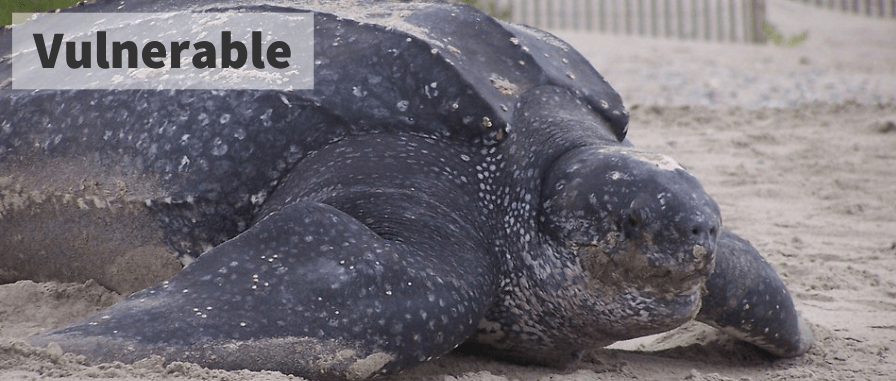
The Leatherback Turtle: the largest of the sea turtles. They play an important role in the ocean by controlling the jellyfish population and can also be a source of income through ecotourism. However, they often mistake plastic bags for jellyfish, and this can be fatal.
McCord’s Box Turtle

This turtle may be extinct in the wild and perhaps no more than 350 remain overall. Not much is known about its biology or habitat because of this. They were overexploited by the Asian turtle trade, and deforestation, pollution, and acid rain might have had a lot to do with their low population. Luckily, it adapts well to captivity and successfully reproduces so there may be hope after all. Right now, however, there are no plans for reintroduction as the environment is still incredibly unstable.
Indochinese Box Turtle

The habitats of Indochinese Box Turtles ate being altered to be used by humans, damaging the natural habitat of the turtles. They are also being threatened by the pet trade and there is an increasing demand for them as either food or medicine as well. We need more information and research to help create a conservation plan to protect them.
Flattened Musk Turtle

Home to Alabama state in the United States of America, the Flattened Musk Turtle is a freshwater creature. There are great declines in available habitat and they’ve lost about 90% of suitable habitat, now only living in 7% of their former land. Pollution is thought to be the cause for high levels of shell erosion and infection and reduction of its food.
 Turtle Conservancy